
Zero Waste Solutions Key to Tackling Methane Emissions in Nigeria – Climate Advocates
Climate and waste management experts are calling for urgent action to address Nigeria’s growing waste crisis, warning that methane emissions from organic waste in dumpsites are significantly contributing to climate change.
The call follows discussions at the Zero Waste Forum held in Istanbul, Turkey, from June 5 to 7, 2026, where policymakers, scientists, waste practitioners, and community advocates from across the globe highlighted the critical role of the waste sector in reducing greenhouse gas emissions.
Speaking after the forum, participants emphasized that organic waste management presents one of the fastest and most cost-effective opportunities to combat climate change.
A key session at the forum, titled “Organic Waste Is a Methane Story, Not a Waste Story,” underscored the dangers of dumping food scraps, market waste, and agricultural residues in landfills. Experts explained that when organic waste decomposes without oxygen, it releases methane—a greenhouse gas far more potent than carbon dioxide.
According to estimates, Nigeria generates between 25 and 32 million tonnes of municipal solid waste annually, with less than one-third collected and only a fraction properly treated. The remainder is disposed of in open dumpsites where it decomposes and releases methane into the atmosphere.
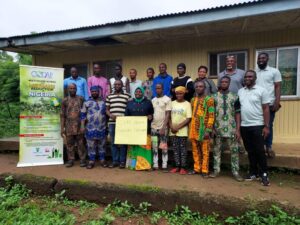
In response to the challenge, several civil society organizations under the Global Alliance for Incinerator Alternatives (GAIA Africa) launched the Multi-Solving Action for Methane Reduction in Nigeria (MAMRN) project in 2024. The initiative is being implemented in communities across Lagos, Abuja, Benin City, and Jos.
The project seeks to address climate change, waste management, food security, livelihoods, and community governance through integrated waste management systems.
Central to the initiative are Material Recovery Facilities (MRFs), where household and market waste is collected, sorted, and processed. Organic waste is converted into compost and animal feed, while recyclable materials such as plastics are recovered for recycling, significantly reducing the volume of waste sent to dumpsites.
The project also supports smallholder farmers by providing training on composting organic waste instead of burning or dumping it. Advocates say the approach helps reduce methane emissions, lowers dependence on chemical fertilizers, and improves soil health.
Speaking during the forum, President of the Eastern Africa Farmers Federation (EAFF), Elizabeth Nsimadala, stressed the importance of soil health in achieving sustainable waste management.
“Zero waste is in the soil, not in the trash,” she stated, highlighting the role of composting in creating environmentally sustainable agricultural systems.
The forum also drew attention to the contributions of waste pickers, who recover recyclable materials from streets, markets, and dumpsites despite often lacking formal recognition and support.
Participants noted that waste pickers play a critical role in diverting large volumes of waste from landfills and should be integrated into national and local waste management strategies.
As part of efforts to strengthen community participation, the MAMRN project facilitated the establishment of a Zero Waste Parliament in Lagos. The governance platform brings together waste pickers, farmers, women, youth, and community leaders to engage policymakers and advocate for improved waste management policies.
In a significant development, the President of the Association of Scraps and Waste Pickers of Lagos was elected as the first Speaker of the Parliament, a move project leaders say reflects the importance of involving frontline waste workers in decision-making processes.
Advocates argue that the experiences from communities implementing the MAMRN project demonstrate that zero-waste solutions are practical, community-driven, and capable of delivering both environmental and economic benefits.
They maintain that with adequate investment, policy support, and community engagement, Nigeria can significantly reduce methane emissions while creating jobs, improving public health, and strengthening climate resilience.
Mark Acheampong
Senior Reporter, AGTV News Desk GENERALAfrobarometer Report: Most Africans Support Free Movement but Remain Cautious About ImmigrationAugust 5, 2026
 AGRICULTUREAgric Minister Reaffirms Support for RUDN Graduates to Drive Feed Ghana AgendaAugust 5, 2026
 BUSINESSGhana Validates AfCFTA Trade Implementation Review to Boost Intra-African TradeAugust 5, 2026
 BUSINESSAfCFTA Secretariat, Burundi to Develop Roadmap to Accelerate Participation in Africa’s Single MarketAugust 5, 2026