
Accra Unveils Low-Methane Roadmap to Cut Waste Emissions and Advance Zero-Waste Future
Accra, Ghana – The Accra Metropolitan Assembly (AMA) has officially launched its Low-Methane Portfolio, a landmark roadmap designed to significantly reduce methane emissions from the city’s waste sector while strengthening climate resilience, improving public health, creating green jobs, and accelerating Accra’s transition to a zero-waste future.
The portfolio commits the city to reducing methane emissions from waste disposal by at least 30 percent by 2030, aligning with Ghana’s commitments under the Global Methane Pledge and the country’s Nationally Determined Contributions (NDCs) under the Paris Climate Agreement.
The initiative also supports Ghana’s target of reducing 21,313 kilotonnes of carbon dioxide equivalent (ktCO₂e) emissions by 2030 through sustainable urban solid waste management.
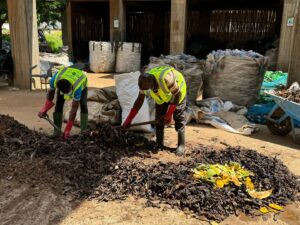
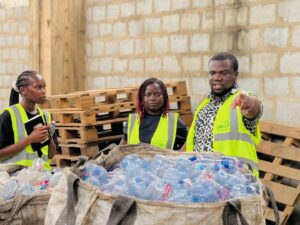
Developed with technical support from the Green Africa Youth Organization (GAYO), the Global Alliance for Incinerator Alternatives (GAIA), and C40 Cities, the portfolio outlines practical strategies to transform waste management in Accra by promoting source separation of organic waste, expanding organic waste diversion, and recognising waste pickers and community groups as central players in reducing methane emissions.
Speaking at the launch, Desmond Alugnoa, GAIA Africa’s Zero Waste and Climate Programme Manager, described the initiative as a demonstration of what can be achieved through collaboration.
“Accra’s Low-Methane Portfolio is proof that when local governments, national, regional and global organisations pull in the same direction, climate targets can become real action on the ground. The opportunity to cut waste methane at the local level is enormous, and Accra is showing that cities across Africa are ready to move when communities, governments and partners co-create practical, locally rooted zero-waste solutions,” he said.
The roadmap is anchored on three strategic priorities. The first aims to achieve 50 percent source-separated organic waste collection by 2030 through citywide collection systems. Secondly, the city plans to establish a decentralised organic waste management system capable of diverting at least 30 percent of organic waste by 2040. The third priority focuses on investing in public education and data systems to increase awareness of the health and climate impacts of food waste while monitoring progress towards Ghana’s climate commitments.
Deputy Head of Waste Management at the Accra Metropolitan Assembly, Victor N. Kotey, said the initiative represents a long-term commitment to future generations.
“We envision an Accra where climate action is more than a policy commitment; it is a promise to our people, our children, and the generations who will inherit this city. We are demonstrating that when communities, institutions and young people work together, Accra can become a beacon of climate leadership for Ghana, Africa and the world,” he stated.
According to the portfolio, the planned interventions are expected to reduce methane emissions by 13,500 tonnes annually by 2040, while creating employment opportunities, improving air quality, boosting compost production to strengthen food systems, and expanding the use of biogas for clean energy.
The Green Africa Youth Organization is calling for stronger partnerships and increased investment to ensure the successful implementation of the roadmap.
GAYO’s Zero Waste Director, Jacob Johnson Attakpah, stressed the need to scale up decentralised, community-led waste management systems.
“The next phase must focus on scaling decentralised, community-based zero-waste systems rooted in local realities, supported by strong city leadership and sustained through meaningful partnerships and investment,” he said.
He further underscored the importance of integrating waste pickers into the city’s waste management strategy.
“At the core of this transition is recognising waste pickers as essential actors in implementation. Their knowledge, labour and leadership must be fully integrated into how Accra reduces organic waste from landfill, strengthens resource recovery, and delivers measurable methane reductions that advance Ghana’s Nationally Determined Contributions.”
Accra was recently recognised by the United Nations as one of 20 cities worldwide leading the transition towards zero waste. City authorities say the Low-Methane Portfolio will serve as a platform for future collaboration with development partners, investors, philanthropic organisations, civil society, and the private sector to scale up climate-smart waste management solutions.
Officials believe the initiative marks a major milestone in Accra’s climate agenda and further positions the Ghanaian capital as a leading city driving climate action and sustainable urban development across Africa.
Story by mark Acheampong
Mark Acheampong
Senior Reporter, AGTV News Desk GENERALAfrobarometer Report: Most Africans Support Free Movement but Remain Cautious About ImmigrationAugust 5, 2026
 AGRICULTUREAgric Minister Reaffirms Support for RUDN Graduates to Drive Feed Ghana AgendaAugust 5, 2026
 BUSINESSGhana Validates AfCFTA Trade Implementation Review to Boost Intra-African TradeAugust 5, 2026
 BUSINESSAfCFTA Secretariat, Burundi to Develop Roadmap to Accelerate Participation in Africa’s Single MarketAugust 5, 2026