
Agric Minister Reaffirms Support for RUDN Graduates to Drive Feed Ghana Agenda
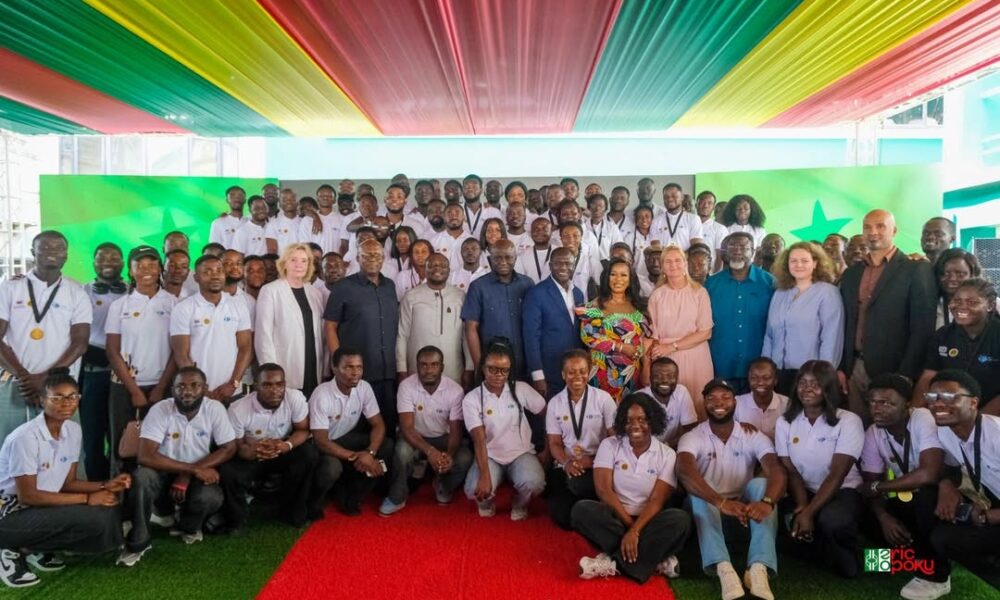
The Minister for Food and Agriculture, Eric Opoku, has reaffirmed government’s commitment to supporting the reintegration of Ghanaian graduates trained in modern agriculture, describing them as key drivers of the country’s agricultural transformation and the successful implementation of the Feed Ghana Agenda.
The Minister gave the assurance during a courtesy call by Ghanaian graduates of Peoples’ Friendship University of Russia (RUDN University), who were sponsored by the African Agribusiness Consortium (AAC) in partnership with the Jospong Group of Companies, at the Ministry of Food and Agriculture in Accra.
Welcoming the graduates, Mr. Opoku congratulated them on successfully completing their studies and urged them to apply their expertise to modernize Ghana’s agricultural sector and improve national food security.
“The successful completion of your studies is a remarkable achievement, and your return home marks the beginning of an important chapter not only in your individual careers but also in Ghana’s agricultural transformation,” the Minister stated.
He noted that Ghana’s agricultural sector requires highly skilled professionals capable of applying innovation, technology, and modern farming techniques to improve productivity, strengthen food systems, and increase value addition across the agricultural value chain.
According to him, agriculture remains central to government’s economic transformation agenda, with the Feed Ghana Agenda designed to boost food production, reduce food imports, create jobs, and promote agribusiness development.
Mr. Opoku said Ghana possesses enormous agricultural potential through its fertile lands and favorable climate but emphasized that unlocking these opportunities requires strategic investment, innovation, and skilled human resources.
To facilitate the graduates’ integration into the sector, he assured them that the Ministry would work closely with the African Agribusiness Consortium, the Jospong Group of Companies, and other stakeholders to create practical opportunities through existing government programmes, including land development, irrigation support, and strategic partnerships.“Our objective is simple: to ensure that the expertise you have acquired translates into increased agricultural productivity, enhanced food security, job creation, and national economic growth,” he said.
The Minister commended the African Agribusiness Consortium and the Jospong Group of Companies for investing in Ghana’s human capital through specialized agricultural education, describing the initiative as a strategic investment in the country’s future.
He also encouraged other private sector organizations and development partners to support similar initiatives aimed at developing the next generation of agricultural professionals.
Addressing the graduates, Mr. Opoku urged them to embrace innovation, remain committed to continuous learning, and use their knowledge to solve practical challenges confronting farmers and agribusinesses.
“The future of agriculture belongs to young professionals who are innovative, technologically driven, and entrepreneurial. Your success will inspire more young Ghanaians to pursue careers in agriculture,” he added.
Founder of the Jospong Group of Companies, Dr. Joseph Siaw Agyepong, said investing in human capital has always been a cornerstone of the company’s growth strategy.
He disclosed that previous investments in young professionals enabled the Jospong Group to expand its operations into 29 African countries, adding that the same approach is now being applied to agriculture.
“We believe these graduates will become pioneers of a new agricultural revolution in Ghana. Agriculture presents enormous opportunities, and with perseverance and innovation, they can transform the sector and create lasting impact,” Dr. Agyepong stated.
Chief Executive Officer of the African Agribusiness Consortium (AAC) and Executive Director of the Jospong Group, Dr. Mrs. Adelaide Siaw Agyepong, said the scholarship programme goes beyond academic excellence and is intended to produce professionals capable of transforming Ghana’s agricultural landscape.
She explained that the graduates are expected to convert research, innovation, and technical expertise into productive farms, sustainable agribusinesses, environmental solutions, and employment opportunities.
“Our vision is to build a new generation of agricultural professionals who will transform knowledge into enterprise. This requires a structured framework that provides access to land, irrigation, finance, mechanisation, research, markets, and strategic partnerships,” she said.
Dr. Mrs. Siaw Agyepong called for stronger collaboration among government, academia, the private sector, and farming communities to accelerate agricultural development and create sustainable livelihoods.
The graduates are expected to contribute significantly to commercial farming, climate-smart agriculture, mechanisation, environmental management, agricultural research, and value chain development as Ghana intensifies efforts to build a modern, resilient, and globally competitive agricultural sector.
The meeting underscored the growing importance of public-private partnerships in equipping young professionals with the skills and opportunities needed to drive agricultural innovation, strengthen food security, and support Ghana’s long-term economic transformation.
 AGRICULTUREGovernment Launches GH¢100 Million Fund to Transform Agricultural Education in Ghana
 AGRICULTUREAgric Minister Calls for Stronger Public-Private Partnerships to Enhance Food Security