
GAIA Africa Trains Journalists on Zero Waste Reporting Ahead of Africa Zero Waste Academy
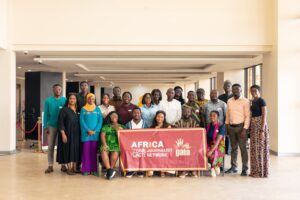
Accra, Ghana – GAIA Africa has organised an intensive in-person training programme for Ghanaian journalists on zero waste reporting ahead of the second edition of the Africa Zero Waste Academy, aimed at strengthening environmental journalism and climate reporting across the continent.
The training, held in Kpone in the Eastern Region, brought together members of the Africa Zero Waste Journalists (AZWJ) network and marked the first face-to-face gathering of the network since its establishment in 2024.
The session sought to enhance participants’ understanding of climate science, zero waste solutions and emerging storytelling techniques, particularly the use of artificial intelligence and short-form digital content in journalism.
The AZWJ network has, over the past year, relied on quarterly virtual workshops to build the capacity of journalists and expand its membership. Organisers said the decision to hold an in-person meeting was intended to strengthen professional relationships among members while providing practical learning experiences.
Speaking at the event, Communications Associate at GAIA Africa and Coordinator of the Africa Zero Waste Journalists Network, Ibrahim Khalilulahi Usman, said the move from virtual engagements to face-to-face training was necessary to deepen collaboration and equip journalists with practical reporting skills.
“The shift from virtual to in-person training is about more than convenience. It is an opportunity to build trust, share lived experiences and equip reporters with the practical skills they need to hold power to account on waste, pollution and climate resilience,” he said.
The day-long workshop featured three key training modules covering the fundamentals of climate science, zero waste as a climate solution and the use of social media reels to enhance climate storytelling.
Facilitators combined presentations, group discussions and practical exercises, drawing examples from real-life environmental challenges in Ghana, including coastal erosion in the Volta Region and recurrent flooding in Accra.
One of the sessions, facilitated by media trainer Hafiz Larry Alhassan, focused on the growing role of short-form video content in environmental reporting.
“Reels are not just a trend; they are a tool for engagement. A well-crafted 30-second clip can make complex science accessible, spur community action and reach audiences that traditional reporting often misses,” he noted.
Participants were also encouraged to critically assess climate interventions and avoid promoting misleading narratives. Discussions highlighted the distinction between climate mitigation and adaptation while drawing attention to what experts described as false climate solutions, including some carbon offset schemes and waste-to-energy projects that may perpetuate pollution.
Africa Communications Manager at GAIA Africa, Carissa Marnce, urged journalists to scrutinise environmental claims and expose instances of greenwashing.
“Journalists must be able to spot greenwashing and question projects that are presented as climate action but fail to reduce emissions or harm local communities. Our role is to provide clear, evidence-based information that will inform reporting and help the public and policymakers make informed choices,” she said.
The zero waste segment of the training presented waste reduction, reuse and recycling as practical approaches to reducing emissions, improving public health and creating green jobs.
GAIA’s Zero Waste and Climate Manager, Desmond Alugnoa, shared case studies demonstrating how initiatives such as community composting programmes and waste-picker cooperatives can deliver significant environmental and economic benefits when supported by appropriate policies and investments.
During interactive sessions, journalists worked in groups to identify climate-related story ideas and develop short video concepts that could be produced with limited resources.
Beyond the technical training, the meeting also served as a platform to strengthen collaboration among environmental journalists across Africa. Organisers expressed hope that stronger personal connections among members would lead to cross-border investigations, collaborative reporting projects and increased peer support.
With climate-related challenges becoming more severe across the continent, organisers stressed the importance of accurate, solutions-focused and locally relevant environmental reporting.
“We are training journalists not just to report events, but to explain systems, expose false solutions and highlight practical alternatives. That kind of journalism can change the conversation and, ultimately, influence policy,” Mr Usman added.
The Africa Zero Waste Journalists Network is expected to continue its quarterly training programme through a combination of virtual and in-person engagements to expand the reach and impact of environmental journalism across Africa.

Mark Acheampong
senior reporter, AGTV News Desk AGRICULTUREAgric Minister Calls for Stronger Public-Private Partnerships to Enhance Food SecurityAugust 4, 2026
 GENERALGlobal Unity and Peace International Summit 2026 Launched, Stakeholders Advocate Peace and Religious ToleranceAugust 4, 2026
 GENDERRURAL WOMEN IN AFRICA FACE DEEPER EDUCATION, EMPLOYMENT AND DIGITAL ACCESS GAPS – AFROBAROMETERJuly 31, 2026
 EDUCATIONGOVERNMENT DONATES 2,000 LAPTOPS TO UNIVERSITY OF GHANA TO BOOST DIGITAL SKILLS TRAININGJuly 30, 2026