
SMART SARPONG DEFENDS POLLING METHODOLOGY, CAUTIONS AGAINST READING SURVEY AS NDC ELECTION PREDICTION
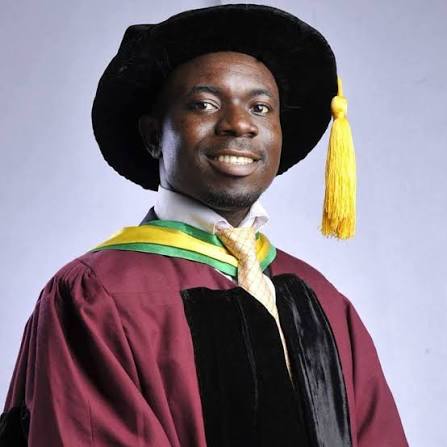
Director of Research and Innovation at the Kumasi Technical University, Professor Smart Sarpong, has defended his polling methodology and cautioned against interpreting his latest survey on the National Democratic Congress flagbearership contest as a prediction of the party’s eventual internal election outcome.
Professor Sarpong says the survey is intended to capture the current perceptions of NDC delegates and stakeholders, rather than determine which potential candidate is likely to win the flagbearership.
Speaking at a press conference in Accra, he said the study covered 11 regions, 136 constituencies and 350 communities, involving 9,330 respondents, including 5,580 stakeholders and 3,750 NDC delegates.
According to Professor Sarpong, the survey assessed perceptions of potential candidates, particularly their suitability for the presidency and their ability to unify the party.
He explained that the study also categorised candidates according to emerging trends, including those perceived to be rising, peaking, declining or remaining uncertain.
Professor Sarpong said the researchers deliberately did not ask delegates who they intended to vote for, arguing that it was too early to measure voting intentions because the party has not yet formally opened the flagbearership nomination process.
He said questions on voting intentions would become more relevant after candidates officially enter the race, pick their nomination forms and begin campaigning.
According to the findings presented, Vice President Jane Naana Opoku-Agyemang recorded a one-percentage-point lead over Eric Opoku in the measure of overall suitability for the presidency.
Professor Sarpong, however, stressed that the figure should not be interpreted as an indication of who would eventually win the NDC flagbearership contest.
He also identified Eric Opoku as a candidate showing a significant rise in the perceptions measured by the survey, while some potential contenders remained uncertain because their decision to contest was not yet clear.
The researcher also presented findings on the performance of Metropolitan, Municipal and District Chief Executives.
The survey found that 13.4 percent of respondents rated the performance of MMDCEs as good, while 4.6 percent described it as very good. 43.1 percent considered their performance normal, while 38.9 percent rated their performance as poor or very poor.
Professor Sarpong has also responded to criticism of his polling work, insisting that public criticism will not deter him from conducting research and analysing political trends.
He said his work is based on research, data analysis and established methodologies, and that researchers provide a snapshot of public opinion at a particular point in time.
“Mine is research and data analysis. I am a professor of research, design and data analysis. So, I don’t stop doing what I’ve been trained to do.”
He said researchers must also be prepared to compare their findings with actual election results when elections are held, in order to understand variations and improve future research methodologies.
Professor Sarpong further defended his previous polling work ahead of the 2024 general election, arguing that critics should examine the methodology and full research reports rather than relying solely on social media commentary.
He maintained that his reports contain the basis for the conclusions presented and remain available for public scrutiny.
He reiterated that the latest NDC survey should be viewed as a snapshot of delegate perceptions at the current stage of the party’s internal process, rather than a forecast of the eventual election outcome.
story by: Mark Acheampong
Mark Acheampong
Senior Reporter, AGTV News Desk GENERALCorruption Watch Petitions AG Over Ownership of Hohoe, Agogo Public Sports FacilitiesSeptember 24, 2026
 GENERALCentral African Civil Society Organisations Launch Regional Democracy Network in AccraSeptember 24, 2026
 GENERALPolice to fully roll out TRAFFICTECH-GH from October 1September 16, 2026
 GENERALBishop Saah recalls Assemblies of God connection ahead of World CongressSeptember 15, 2026